Why a club
I founded Herstory to create a place where an interest in gender could become sustained reading and discussion. Films, literature, social research, and everyday language give us different ways into a question.
The club in practice
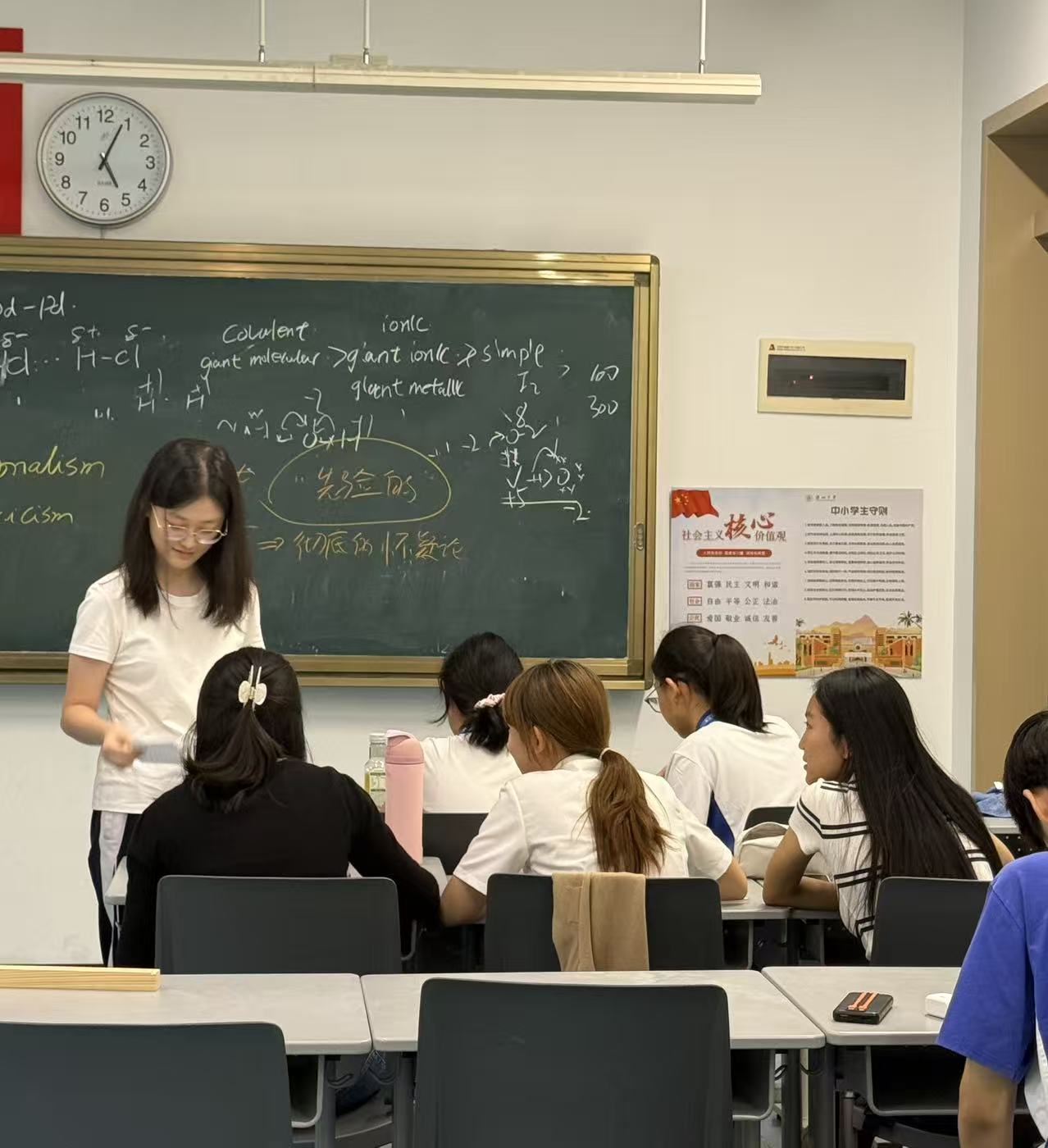
Herstory has about 50 members. I organize club sessions and discussions; a joint discussion with other school clubs has also taken place. The 18-session outline below is a curriculum plan, not a record of 18 completed sessions.
Club posters
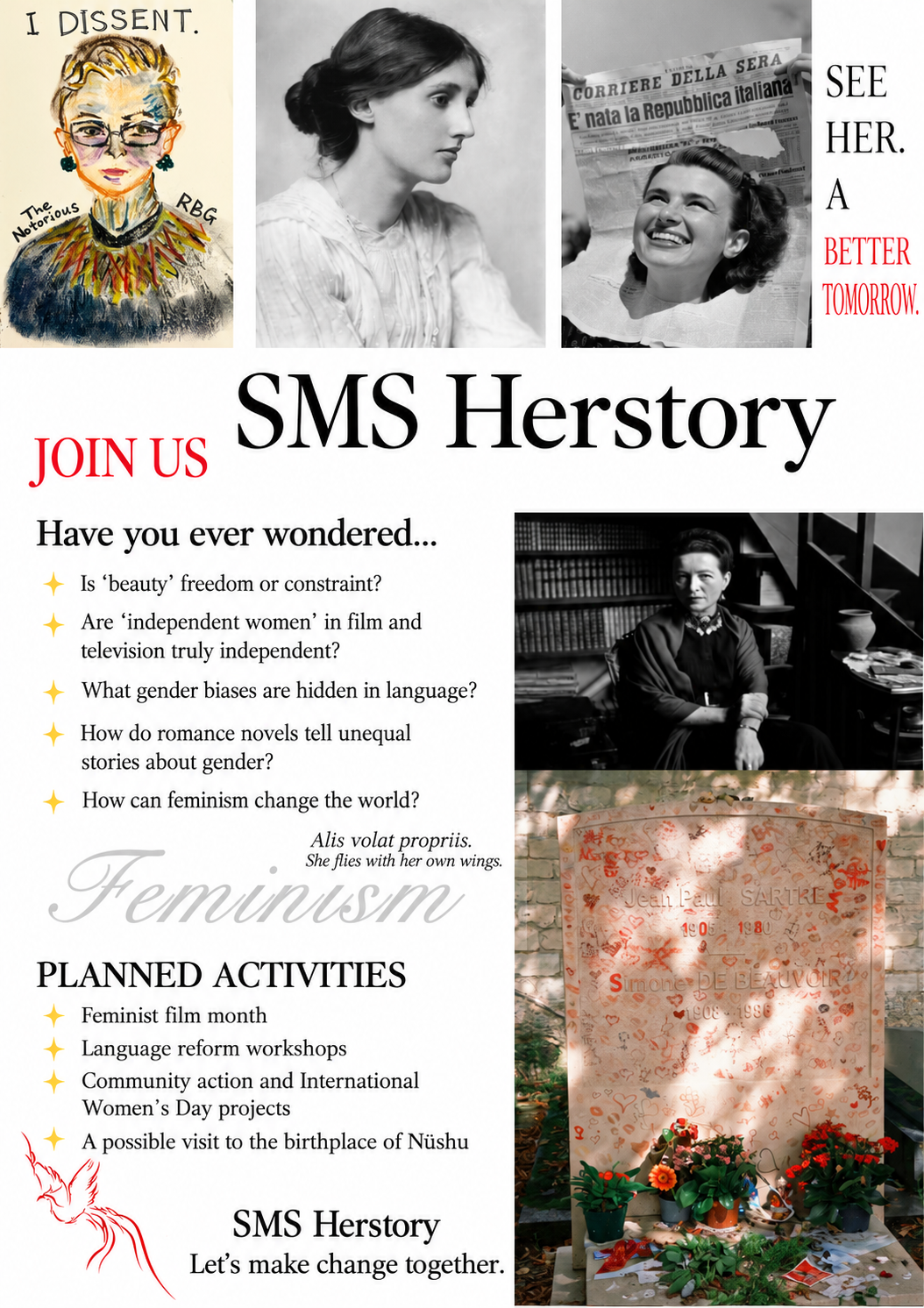
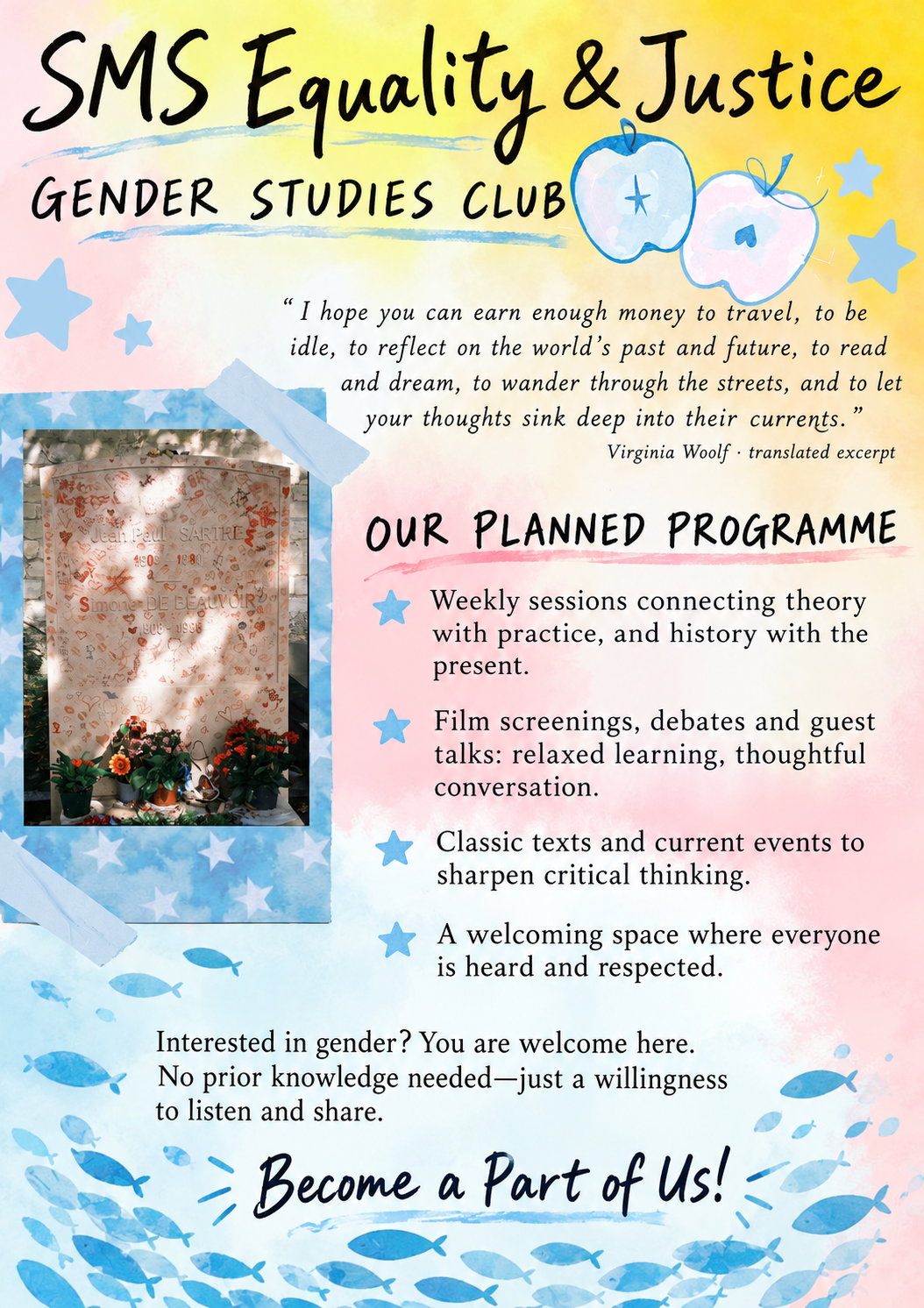
English adaptations of the Chinese recruitment posters. Names are retained as printed; the proposed activities are not a record of completed events.
SMS Herstory
 Open full-size poster
Read the poster text
- SEE HER. A BETTER TOMORROW.
- JOIN US
- Have you ever wondered...
- Is 'beauty' freedom or constraint?
- Are 'independent women' in film and television truly independent?
- What gender biases are hidden in language?
- How do romance novels tell unequal stories about gender?
- How can feminism change the world?
- Alis volat propriis. She flies with her own wings.
- PLANNED ACTIVITIES
- Feminist film month
- Language reform workshops
- Community action and International Women's Day projects
- A possible visit to the birthplace of Nüshu
- Let's make change together.
SMS Equality & Justice
 Open full-size poster
Read the poster text
- GENDER STUDIES CLUB
- I hope you can earn enough money to travel, to be idle, to reflect on the world's past and future, to read and dream, to wander through the streets, and to let your thoughts sink deep into their currents.
- Virginia Woolf · translated excerpt
- OUR PLANNED PROGRAMME
- Weekly sessions connecting theory with practice, and history with the present.
- Film screenings, debates and guest talks: relaxed learning, thoughtful conversation.
- Classic texts and current events to sharpen critical thinking.
- A welcoming space where everyone is heard and respected.
- Interested in gender? You are welcome here. No prior knowledge needed—just a willingness to listen and share.
- Become a Part of Us!
Club merchandise
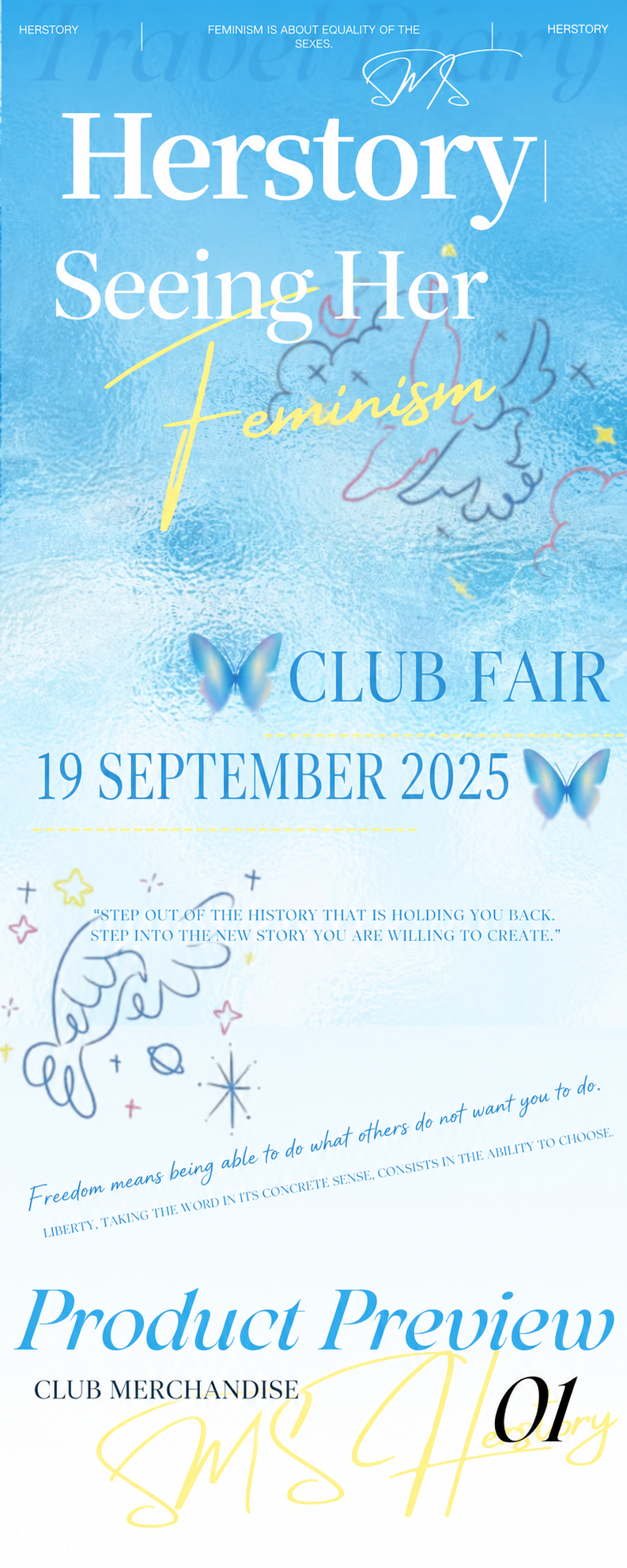
English adaptations of the original Chinese club merchandise previews. Some longer passages are excerpted for readability. Prices shown on the original sheets are in Chinese yuan (CNY).
01 · Club fair preview
 Open full-size image
Read the text
- SMS Herstory · Seeing Her
- Feminism is about equality of the sexes.
- Club fair · 19 September 2025
- Step out of the history that is holding you back. Step into the new story you are willing to create.
- Freedom means being able to do what others do not want you to do.
- Liberty, taking the word in its concrete sense, consists in the ability to choose.
- Product preview · Club merchandise
02 · Postcards & bookmarks
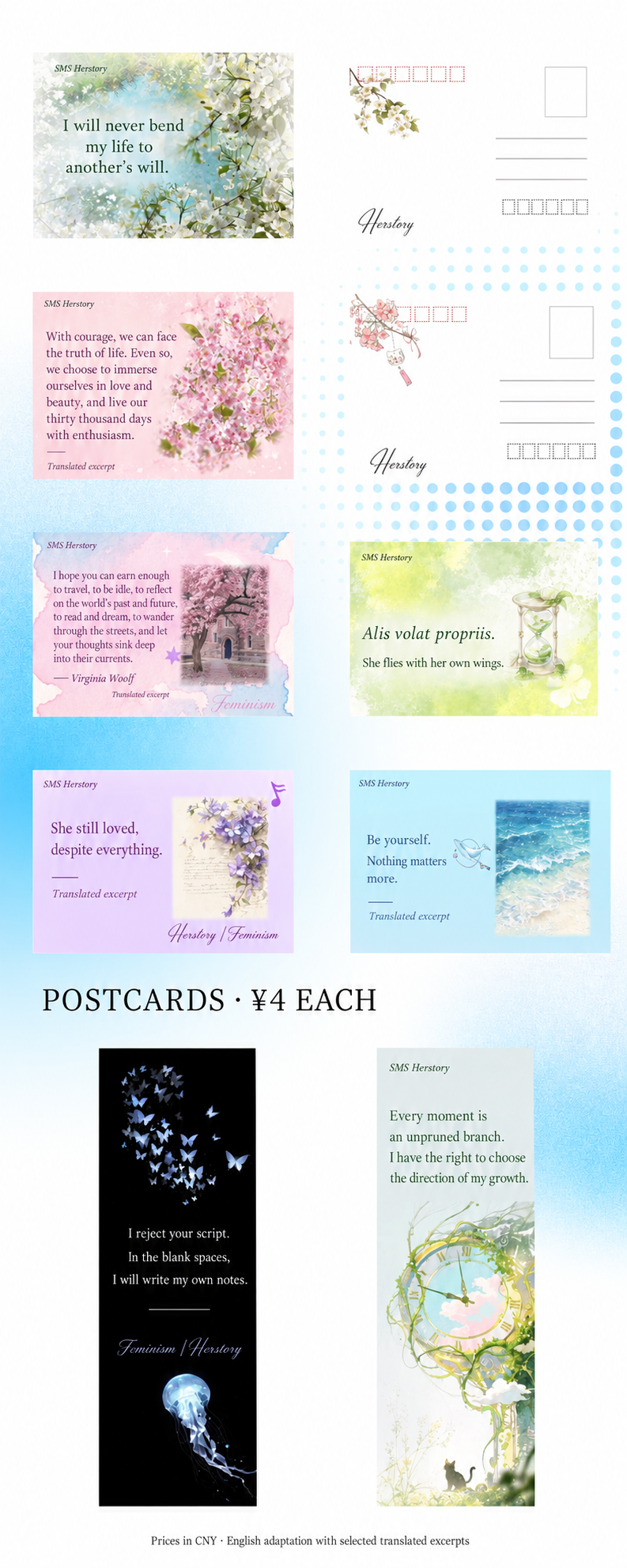 Open full-size image
Read the text
- I will never bend my life to another's will.
- With courage, we can face the truth of life. Even so, we choose to immerse ourselves in love and beauty, and live our thirty thousand days with enthusiasm. (Translated excerpt.)
- I hope you can earn enough to travel, to be idle, to reflect on the world's past and future, to read and dream, to wander through the streets, and let your thoughts sink deep into their currents. — Virginia Woolf (translated excerpt)
- Alis volat propriis. She flies with her own wings.
- She still loved, despite everything. (Translated excerpt.)
- Be yourself. Nothing matters more. (Translated excerpt.)
- I reject your script. In the blank spaces, I will write my own notes.
- Every moment is an unpruned branch. I have the right to choose the direction of my growth.
- Postcards · ¥4 each (CNY)
03 · More club merchandise
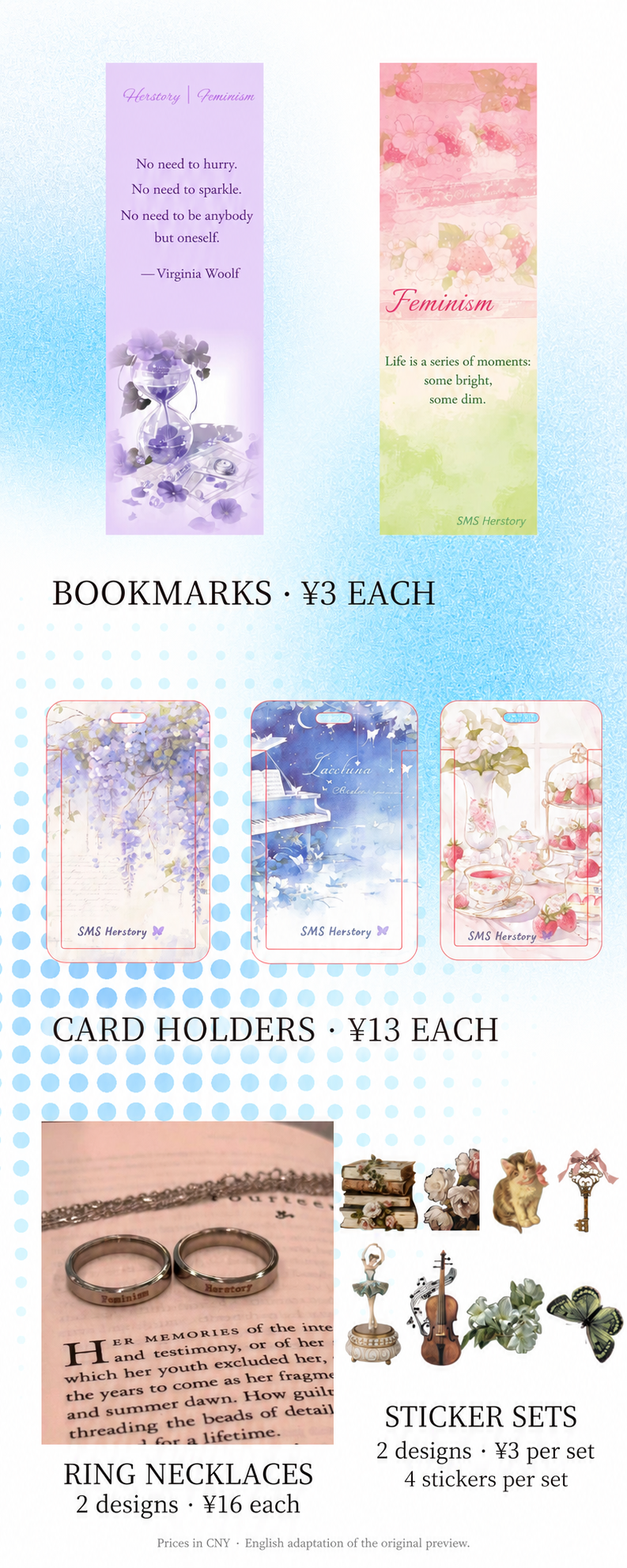 Open full-size image
Read the text
- No need to hurry. No need to sparkle. No need to be anybody but oneself. — Virginia Woolf
- Life is a series of moments: some bright, some dim.
- Bookmarks · ¥3 each (CNY)
- Card holders · ¥13 each (CNY)
- Ring necklaces · 2 designs · ¥16 each (CNY)
- Sticker sets · 2 designs · ¥3 per set · 4 stickers per set (CNY)
About the English editions
These are translated display editions of existing promotional designs. Author credits are retained only where the wording could be checked; other lines are presented as translated design text, not as verified literary quotations. These previews do not document production or sales.
Inside the curriculum
My 18-session curriculum plan moves between introducing ideas, reading examples, and discussing interpretations. The outline below groups its themes; it describes curriculum design, rather than a count of completed events.
- Methods and feminist theories
- Media, appearance, and gender expectations
- Education, employment, and care
- Histories and different feminist perspectives
- Women in film and literature
- Language, Nüshu, and cultural expression
How a topic becomes a discussion
The curriculum pairs portrayals of women in films such as Legally Blonde with a discussion of how commercial cinema constructs an “independent woman.”
A planned unit introduces Claudia Goldin’s work as a starting point for discussing education, employment, and gender.
Other planned sessions consider Nüshu and how everyday language can objectify people.
My work and continuing questions
My responsibilities include developing the curriculum, preparing club teaching, and organizing discussions. I want a discussion to make its assumptions visible and give participants a chance to explain how they arrived at a view.
The question I keep returning to is how to make complex ideas accessible while keeping room for disagreement and further reading.