Starting with a mathematics lesson
For my first class with sixth graders, I prepared introductory junior-high mathematics. Students’ questionnaires indicated an interest in practical knowledge. Remembering the difficulty of that transition, I arranged problems from easier to more challenging ones and included interaction.
I felt nervous. Afterward, a student gave me a handwritten note saying she understood the lesson and encouraging me to be more confident. It reminded me that encouragement can move in both directions in a classroom.
Rewriting a familiar story
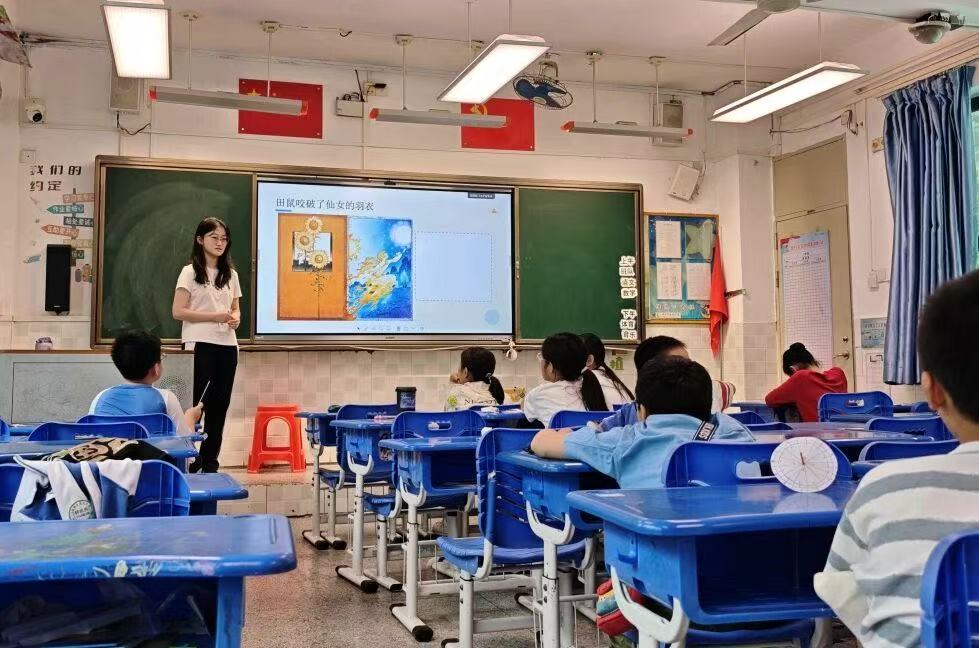
In another lesson, I invited children to examine gender roles in fairy tales. We looked at recurring patterns: who waits, who rescues, and how a character’s worth is described. Students then rewrote the stories with different roles and relationships.
Some initially found the original patterns natural. The task gave them a way to explore alternatives through their own writing.
Different ages, different lessons
My other lessons included modern poetry and lyrics for graduating sixth graders, and mental-health awareness for younger children. Across these topics, preparation meant thinking about the learner’s situation as well as the subject.
From the classroom and beyond


What teaching asks of me
A carefully prepared explanation still needs to change when a child looks confused or asks an unexpected question. I want to keep learning how to notice that moment and respond patiently.