A wedding as a set of expectations
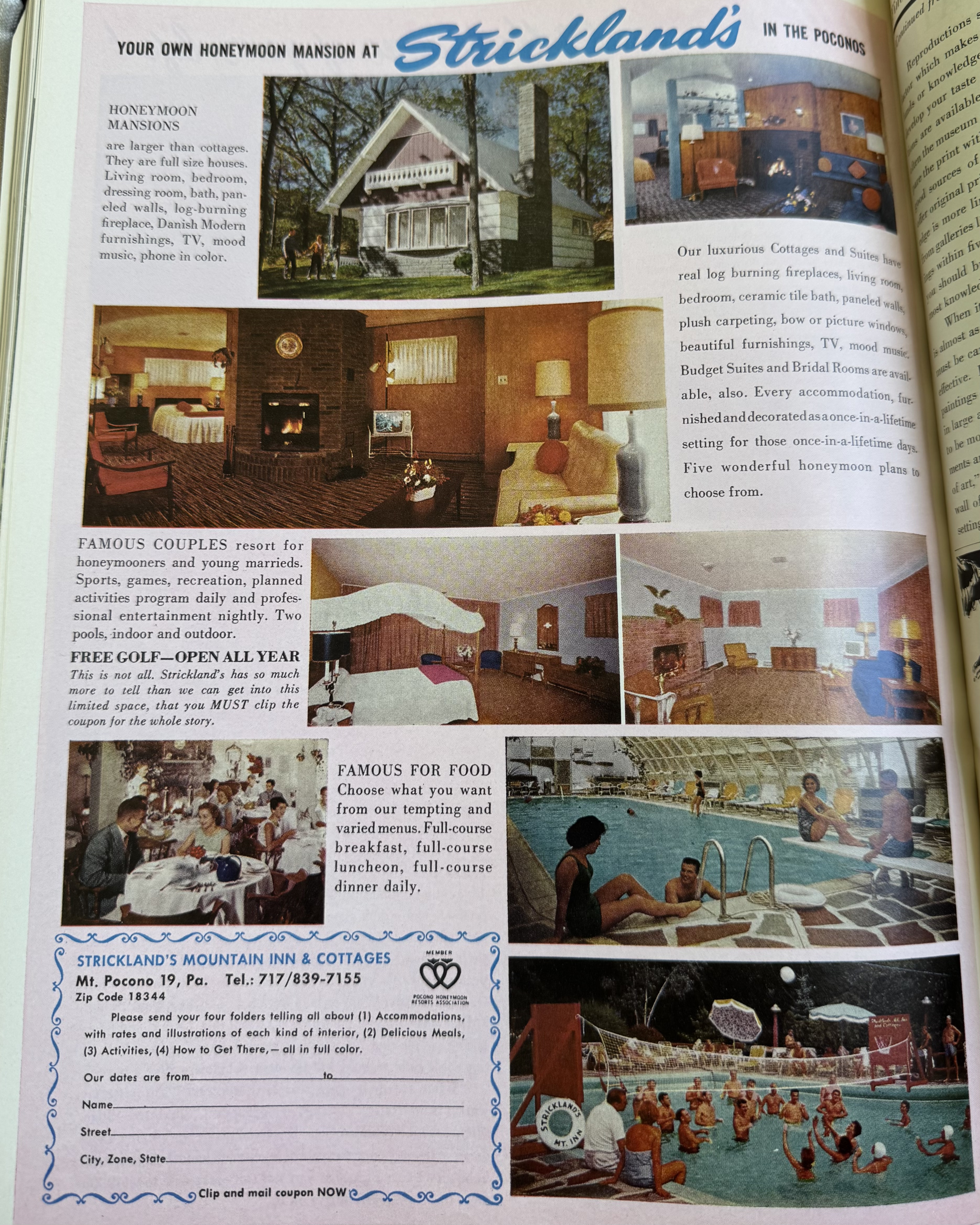
During The Wedding Complex: Markets, Love, and Marriage, I researched bridal publications at the Schlesinger Library and developed the classroom presentation Implications Behind Bridal Publications. Etiquette guides, magazine advertisements, and wedding books offered different ways to examine how an apparently private celebration takes on social meaning.
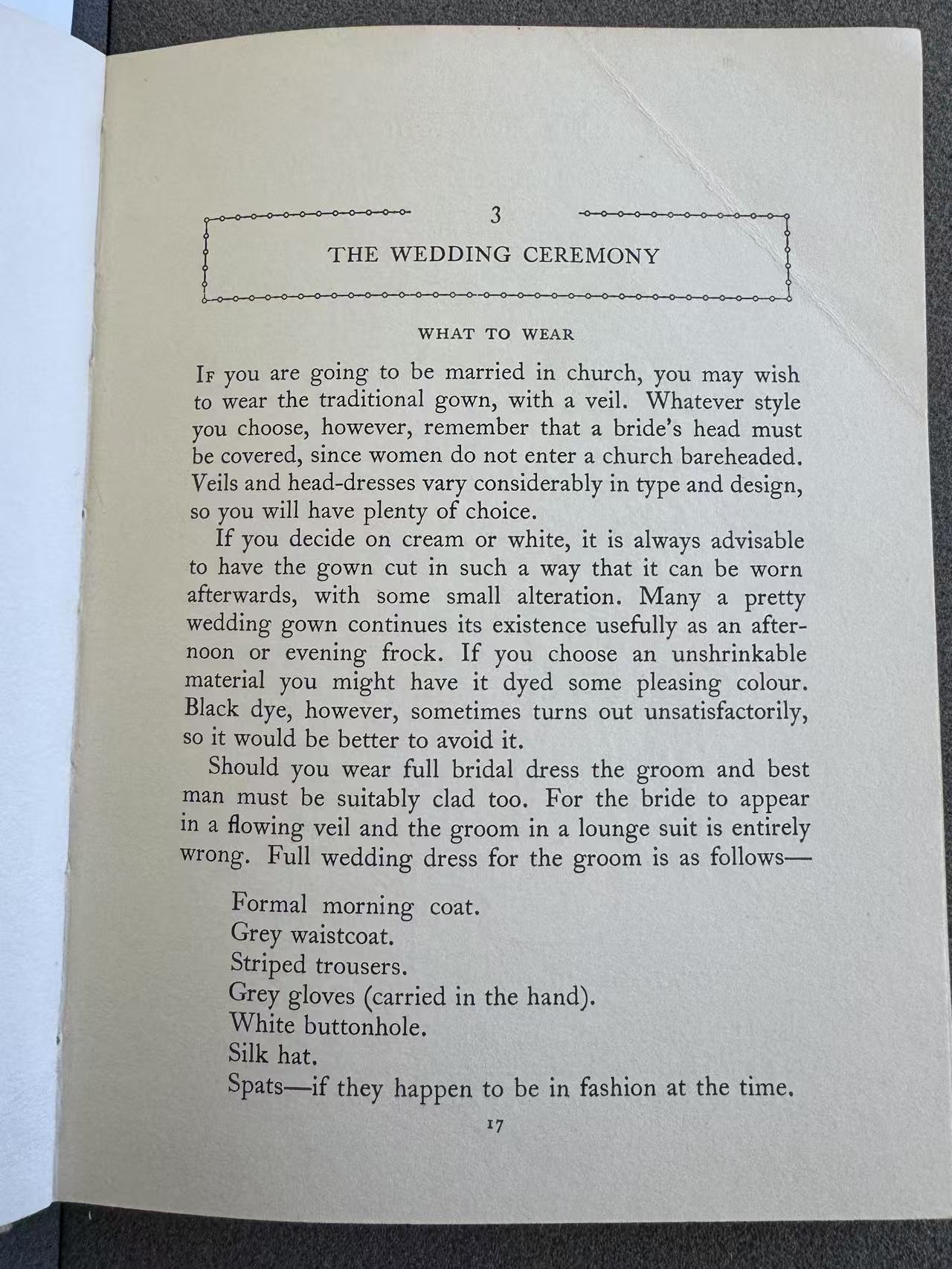
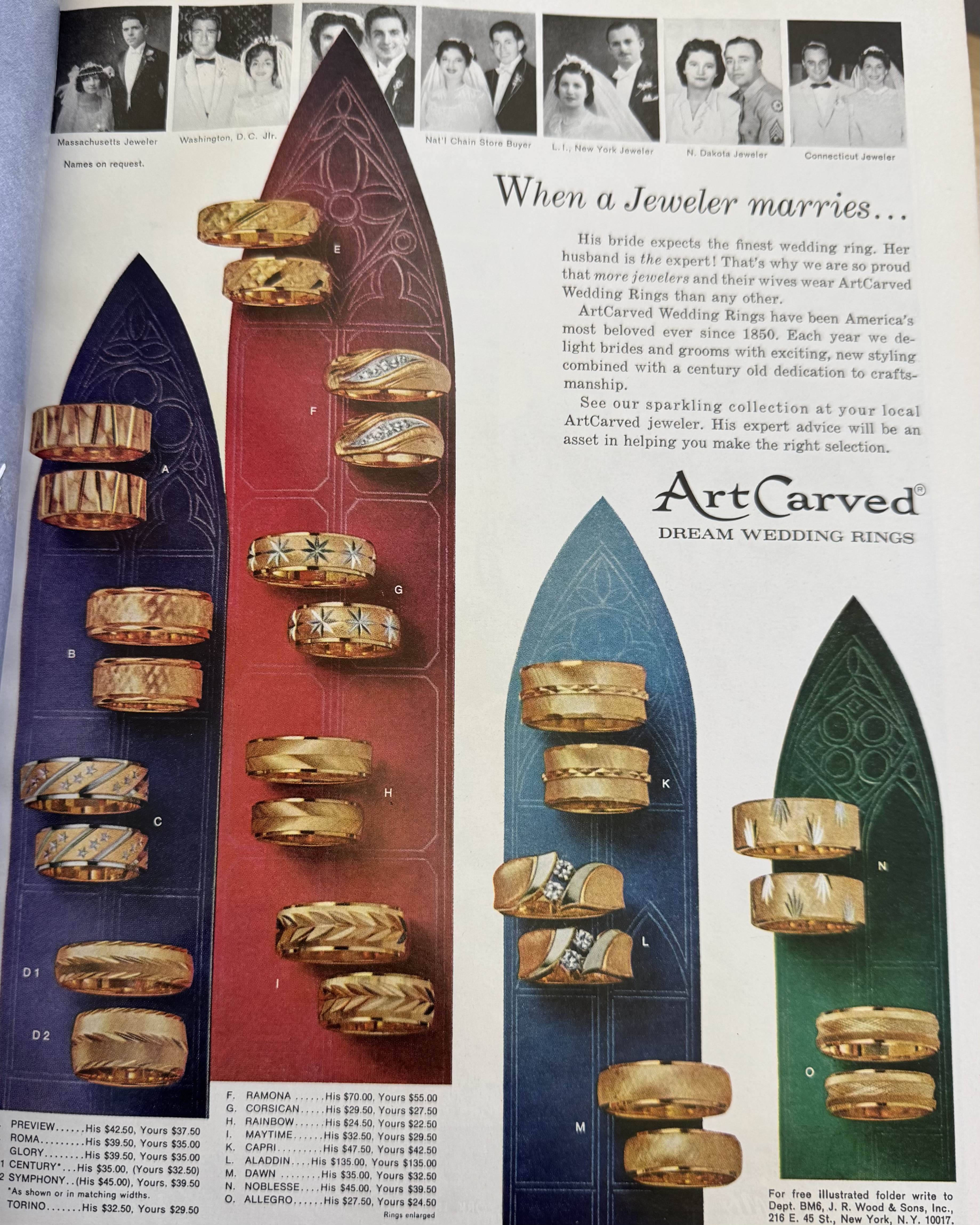
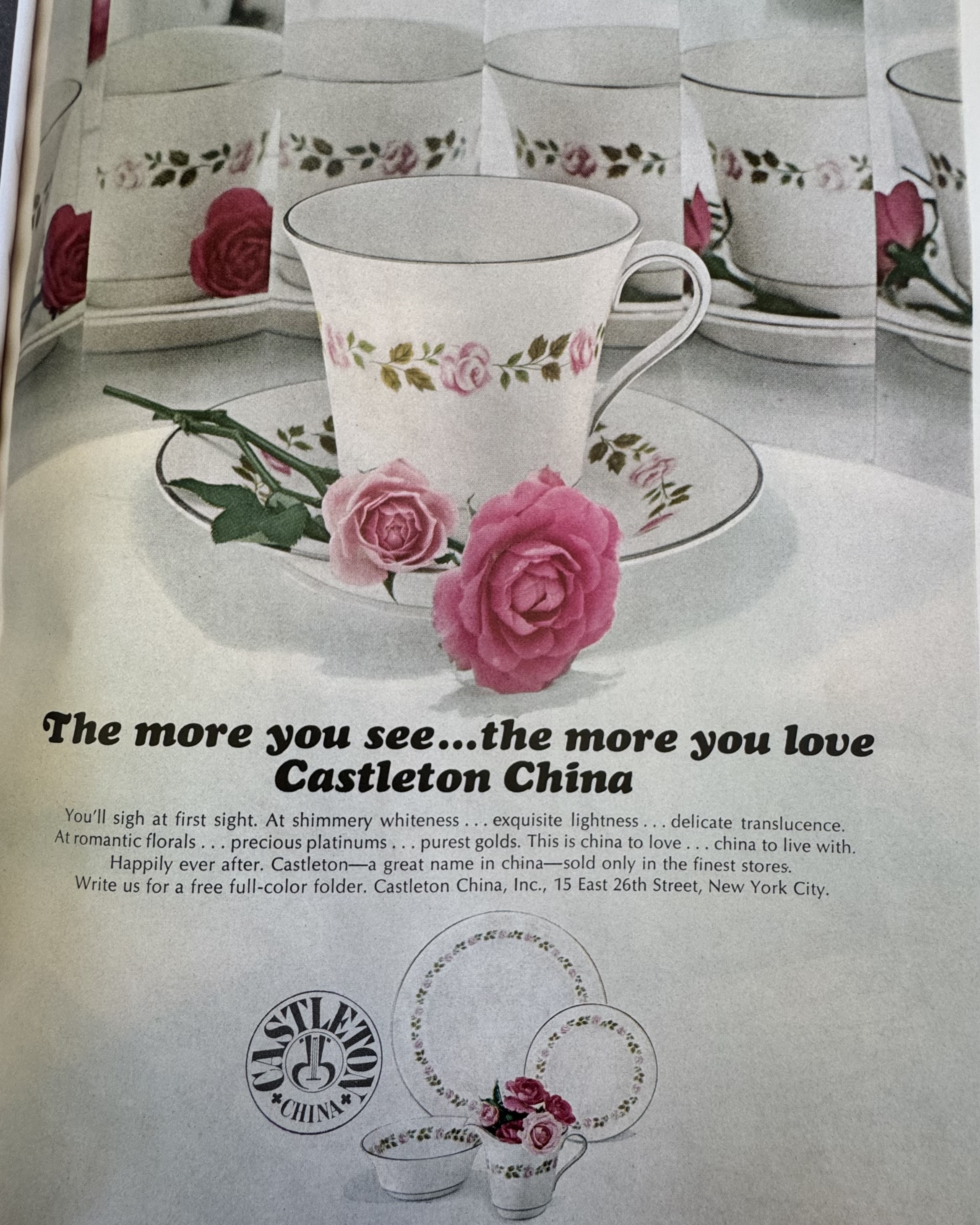
My starting point was concrete: a guide instructs brides to cover their heads in church; advertisements offer rings, tableware, dresses, and honeymoon packages. Reading these details together raises questions about who initiates a decision, who does the work, and what a couple is expected to buy.
Who takes the initiative?
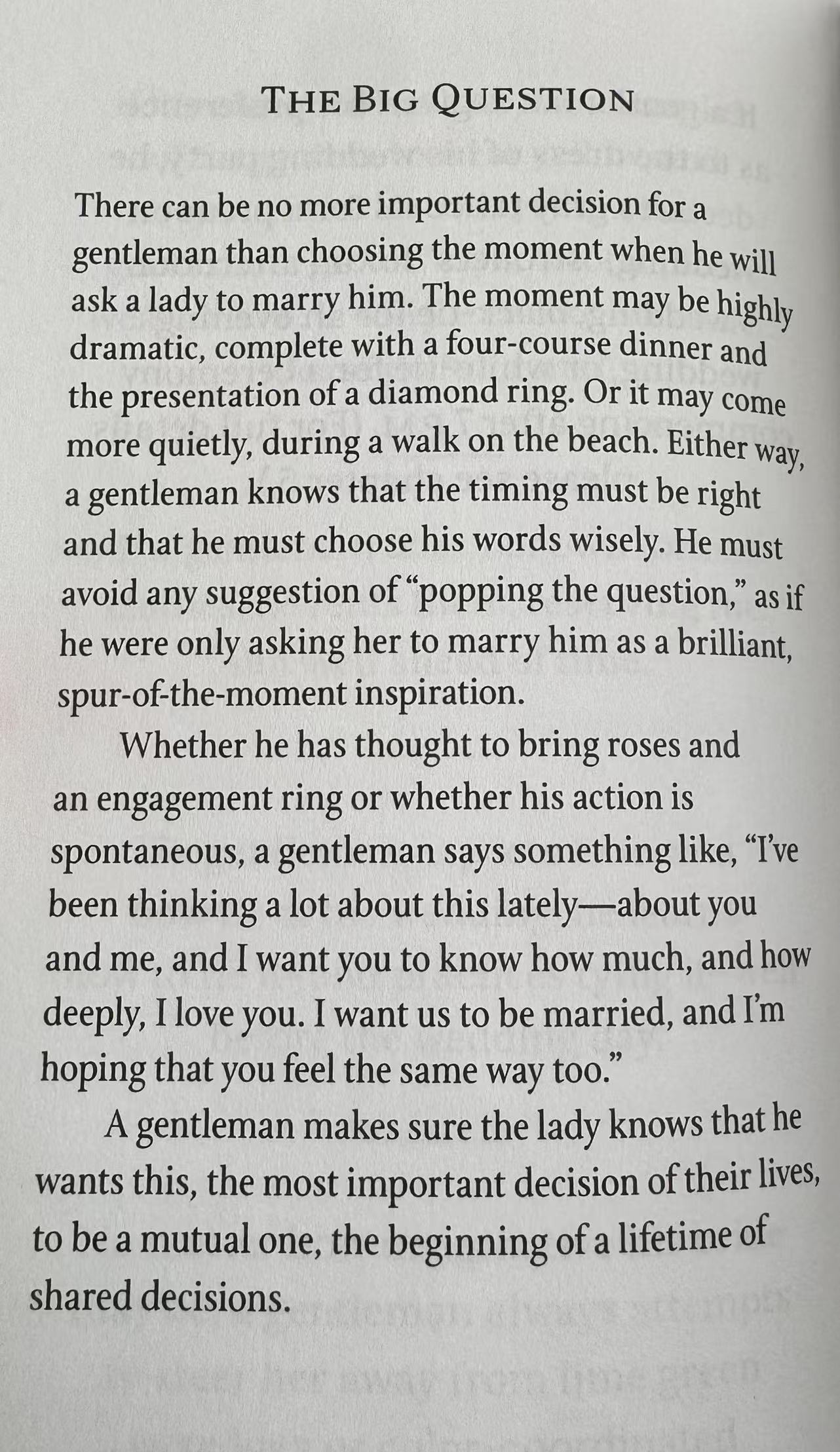
The course material on A Gentleman Walks Down the Aisle shifts attention to the groom. Its proposal advice places him in charge of choosing the moment and words. Its list of duties includes arranging introductions between families. Etiquette can assign initiative before a couple has discussed how to share it.
But the source also complicates that reading. The proposal should be a mutual decision; approaching the bride’s parents is qualified by her wishes. These conditions matter. A useful question is how a guide can affirm shared choice while still assigning different roles to men and women.
The work behind the “ideal bride”
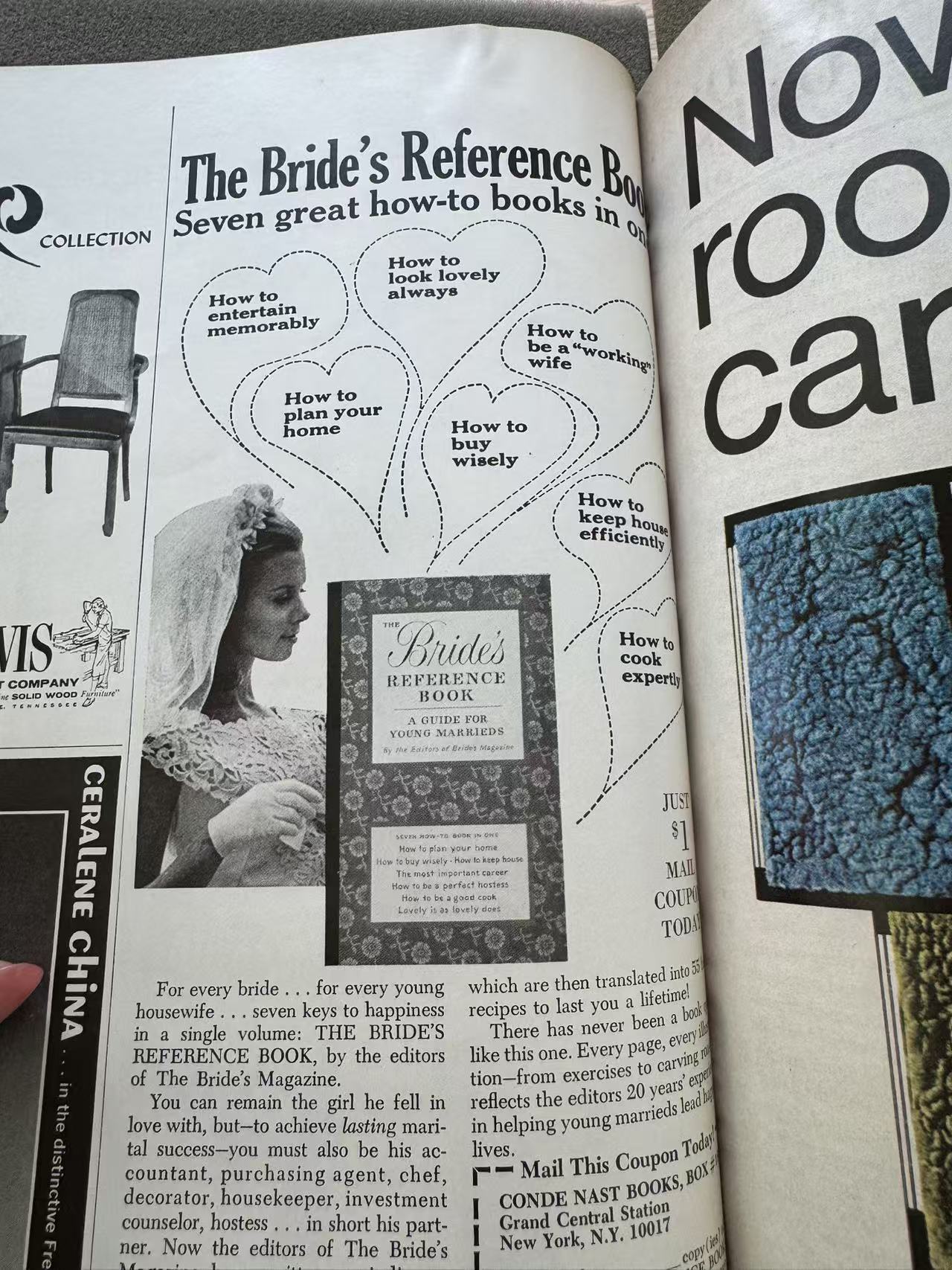
In the April/May 1966 issue of Bride’s, an advertisement for The Bride’s Reference Book promises guidance on entertaining, looking attractive, shopping, cooking, and keeping house. It connects lasting marital success with the bride’s ability to fill numerous roles. The product being offered is a book, but the advertisement also offers a definition of a good wife.
Nearby beauty and hygiene advertisements add another kind of work: keeping the body attractive, youthful, and clean. Read together, these pages invite an examination of how domestic labor and self-maintenance become personal responsibilities, presented through the reassuring language of helpful advice.
Room for questions within the same magazine
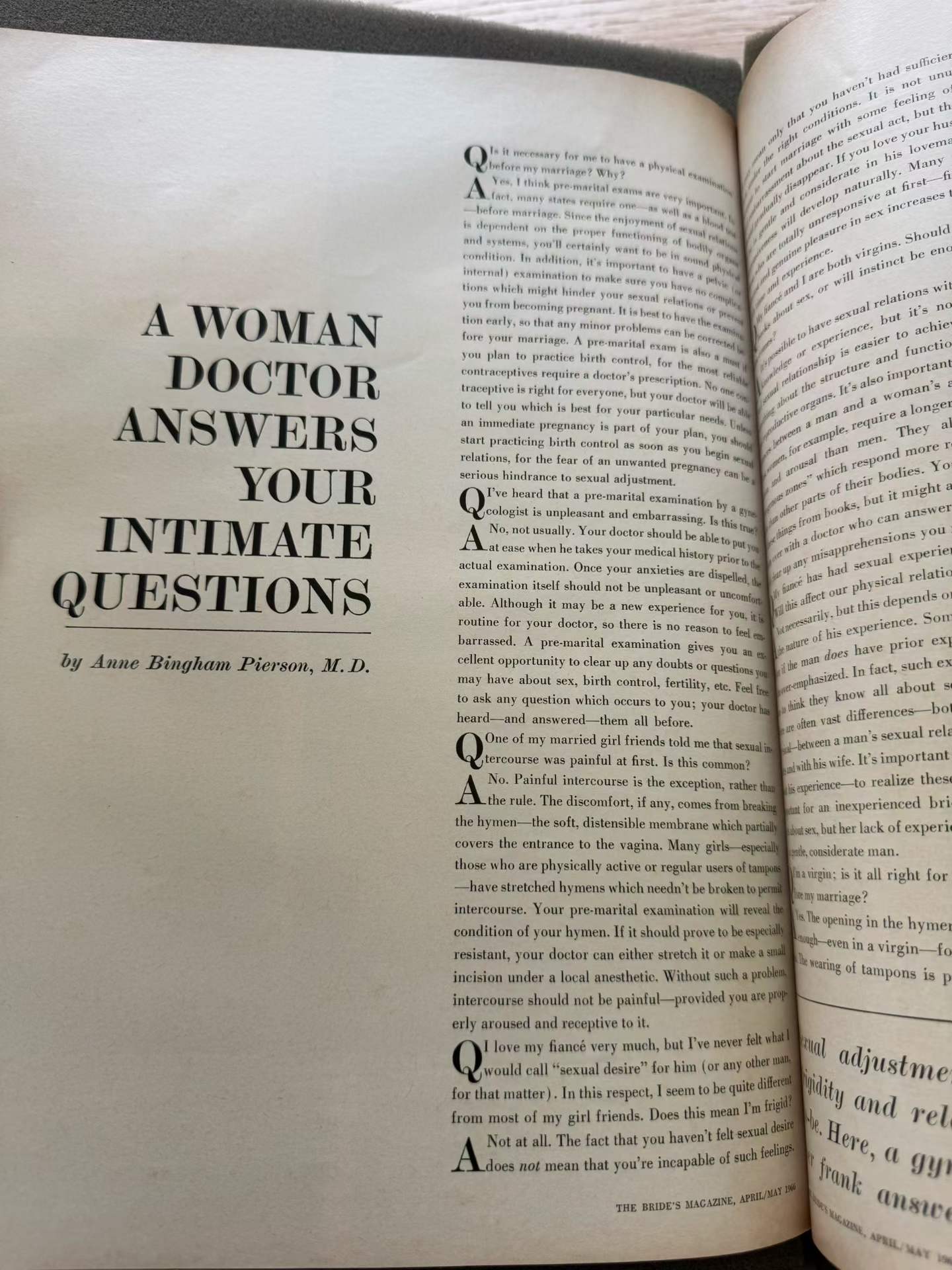
The same issue also contains a woman doctor’s answers to intimate questions, including questions about sexual desire and contraception. The course presentation places these pages alongside the advertisements. That juxtaposition resists an easy conclusion: a publication can prescribe roles while also making some of its readers’ concerns discussable.
The question becomes more precise: which experiences are given a voice, who is authorized to interpret them, and which assumptions about marriage remain in place? Here the column is evidence of what could be discussed in the magazine, rather than a source of current medical advice.
When commitment becomes a purchasable symbol
The Engagement Ring material brings the inquiry to a DR advertisement: a heart-shaped ring rests inside a rose, alongside the promise “One Love, One Lifetime.” The combination connects a purchasable object with an ideal of enduring commitment. It raises a question about how a symbol of love can become an expectation about how love should be demonstrated.
My final presentation also examines settings, flowers, food, and photographs in Martha Stewart’s Weddings. Looking at the resources and coordination these scenes imply opens a related question: whose work and budget make an apparently effortless celebration possible? These are questions prompted by the images, rather than claims about every couple’s choices.

From reading advice to investigating choice
Across these materials, I want to compare what is explicitly required, what is presented as desirable, and what is left unsaid. The church setting limits an instruction about head covering; the language of mutual choice complicates the groom’s role; a space for women’s questions coexists with demanding ideals of wifehood. Keeping these differences visible makes the interpretation more useful.
Next, I would like to compare historical bridal advertising with contemporary wedding content, asking who is expected to plan, pay, or compromise. Publications show advice and representations; evidence about couples’ actual lives would be needed to examine whether changing language has also changed the work and choices available to them.
Classroom presentations
These four classroom presentations were prepared for The Wedding Complex: Markets, Love, and Marriage at Harvard Summer School. Through wedding guides, magazine pages, and advertisements, I explored how expectations about gender, family, and consumption shape the rituals of marriage.
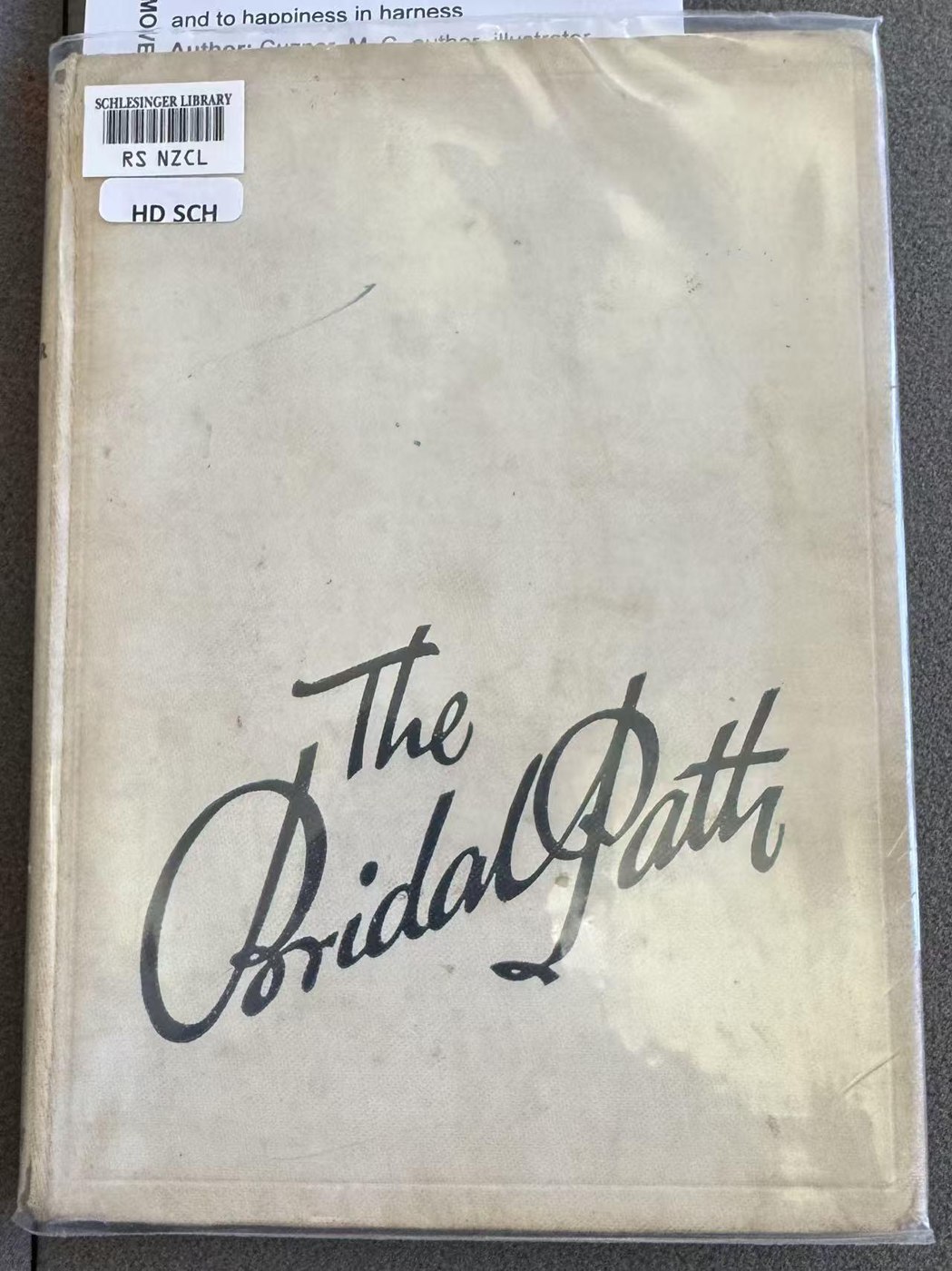
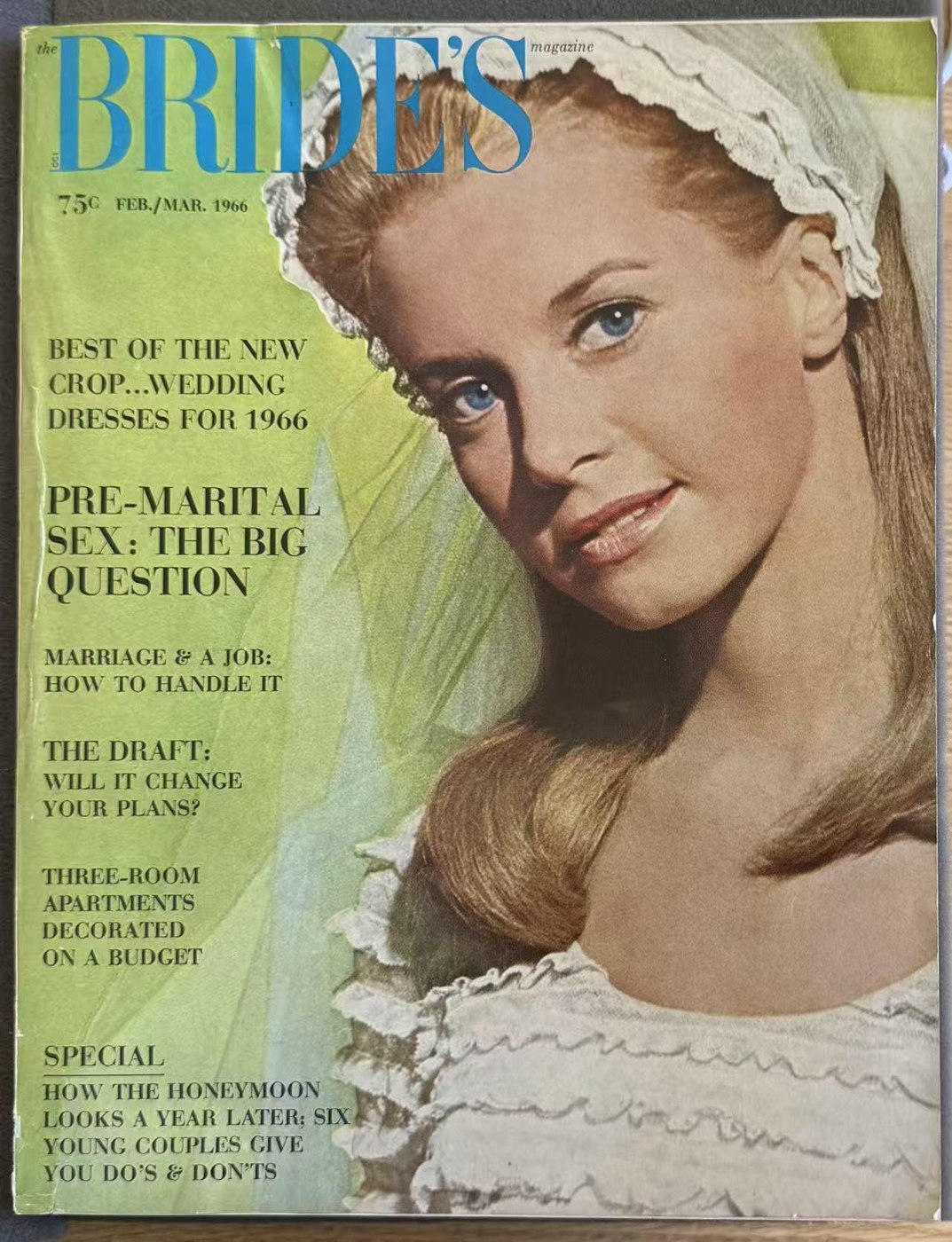
Comparing The Bridal Path (1936), Bride’s magazine (1966), and Martha Stewart’s Weddings (1987), I examined how advice about religious dress, wedding purchases, and elaborate celebrations sets expectations for brides. The presentation connects these expectations with gender roles, displays of social status, and the planning work women are expected to undertake.
A close reading of A Gentleman Walks Down the Aisle, focusing on proposals, conversations with the bride’s parents, and introductions between families. I examined how etiquette assigns initiative and authority to men, and questioned what these familiar rituals imply about women’s agency and their place within family relationships.
Reading advertisements alongside a women’s question column in a 1966 issue of Bride’s magazine, I examined expectations around bodily cleanliness, beauty, and domestic life. The presentation also considers how the same magazine makes room for women’s feelings and sexual knowledge, revealing different messages within one publication.
A close reading of a DR engagement-ring advertisement, focusing on its “one love, one lifetime” slogan, exclusive purchasing rule, and heart-and-rose imagery. I explored how the advertisement turns a ring into a symbol of fidelity and presents a purchase as evidence of lasting romantic commitment.